How Qwen Angles Helps E-commerce Content Teams Solve the Challenge of Generating Multi-Angle Product Images
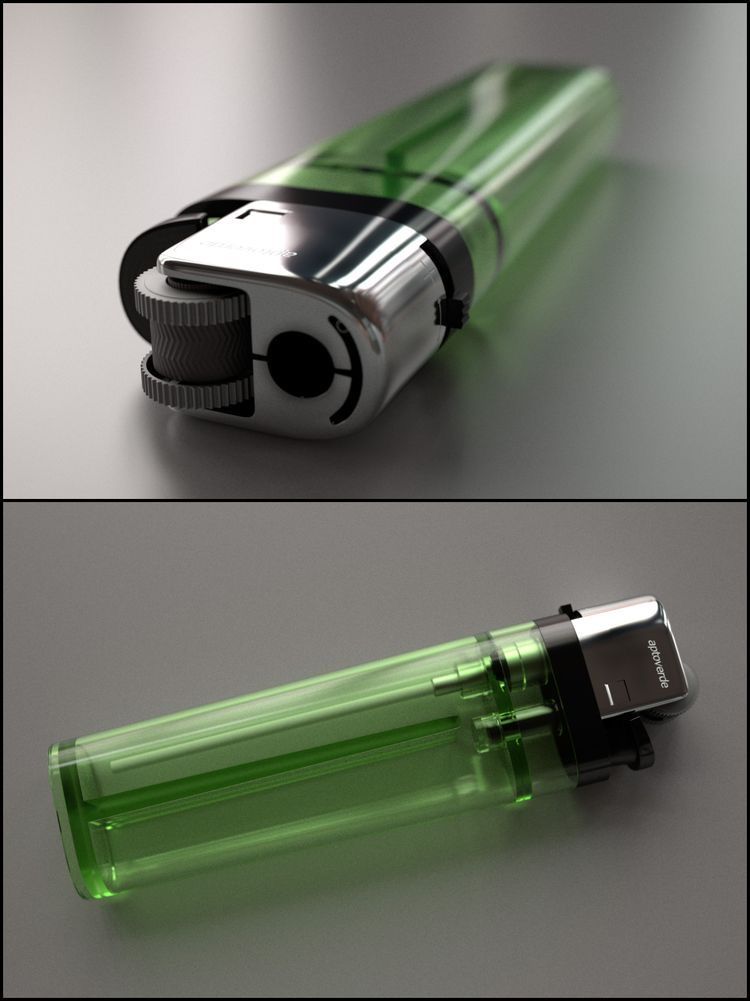
In the fast-paced e-commerce content production landscape, the ability to deliver high-quality, multi-angle product imagery directly impacts conversion rates and time-to-market. For many mid-sized e-commerce brands and independent content studios, generating consistent product shots from multiple camera angles has long been a bottleneck that drains both time and creative resources. This real-world case study examines how Qwen Angles, the AI-powered photo angle converter from QwenAngles.net, transformed one e-commerce content team’s workflow and delivered measurable operational improvements.
Background & Challenges
Client Profile
The client is an independent e-commerce content studio specializing in apparel and accessories product photography, serving over 30 DTC (Direct-to-Consumer) brands across North America. The studio’s core team of 4 photographers and 2 post-production specialists handles approximately 120 new SKUs per month, requiring standardized multi-angle image sets for each product listing.
Core Pain Points
-
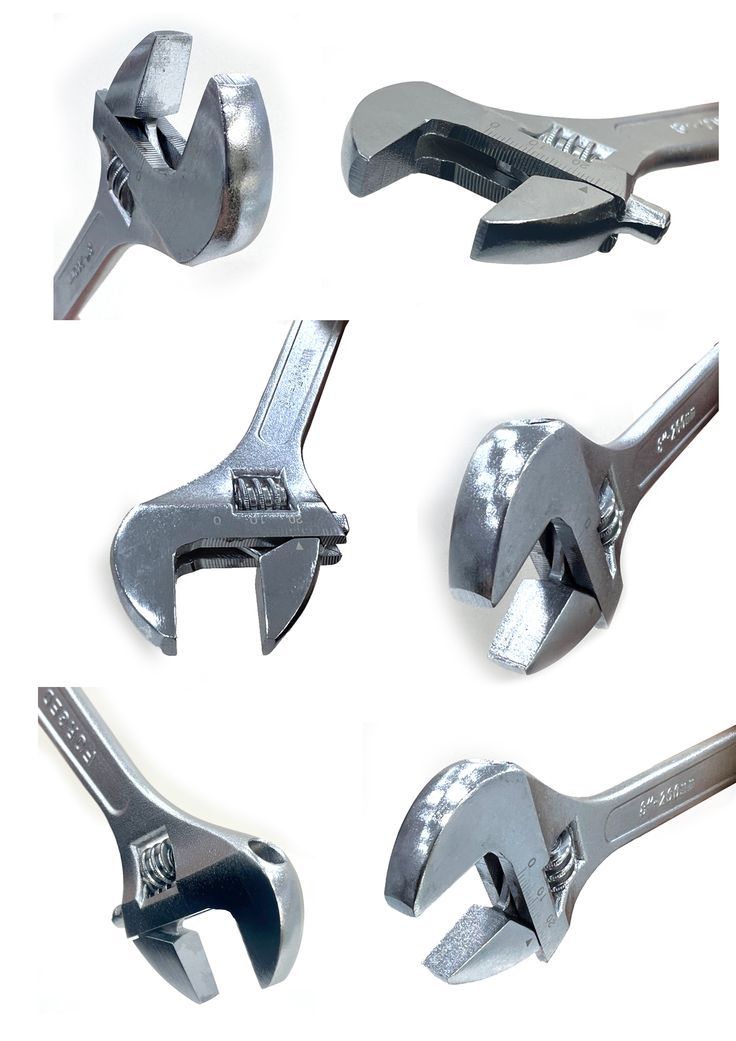
Shooting Efficiency Bottleneck: Traditional on-set angle switching required repositioning lighting, tripods, and product staging for every view. Generating a standard set of 5 angles (front, 45° side, profile, top-down, and close-up detail) for a single product took an average of 45 minutes of active studio time.
-
Post-Production Consistency Gap: Manual perspective corrections in Photoshop frequently introduced geometric distortion or lighting mismatches across angle sets, with an average rework rate of 18% for angle-altered images.
-
Geometric Fragmentation Risks: Early AI angle-editing tools tested by the team suffered from structural inaccuracies — warped product edges, misplaced texture details, and inconsistent proportions — issues widely documented in camera-controllable image editing research as “geometric fragmentation” challenges.
-
Skill Dependency: Reliable angle manipulation required advanced proficiency in both 3D rendering software and professional photo editing suites, making the workflow inaccessible to junior team members.
Failed Traditional Approaches
The studio previously attempted three alternative solutions: manual Photoshop perspective warp tools (too slow and inconsistent), 3D product modeling pipelines (too expensive for fast-fashion SKU turnover), and earlier-generation AI image editors (poor geometric accuracy for apparel products). None met the studio’s combined requirements for speed, visual fidelity, and production reliability.
The Breakthrough Solution
Expert Diagnosis
After a 3-day workflow audit, the QwenAngles.net technical consultation team identified the root constraint: the studio was attempting to solve a camera angle control problem through 2D editing workflows, when a geometric-aware AI perspective transformation engine could directly address the multi-angle generation requirement at the source.
Solution Architecture
The implementation deployed the full Qwen Angles AI photo angle converter stack, with three core modules tailored to e-commerce product imagery:
-
Natural Language Angle Control Module: Supports plain-text commands for pan, tilt, rotation, focal length adjustment, and perspective switching — no trigger words or technical syntax required
-
Geometric Consistency Engine: Maintains product proportions, texture alignment, and lighting logic across sequential angle transformations, addressing the geometric fragmentation issue common in earlier models
-
Batch Angle Generation Pipeline: Allows users to define a standard multi-angle template and generate a full set of views from a single input image in one operation
Key Implementation Steps
-
Workflow Integration (Day 1): Connected Qwen Angles web interface (available at https://qwenangles.net) to the studio’s existing cloud asset library, enabling direct upload/download of product RAW files.
-
Team Onboarding (Day 2): Conducted a 90-minute training session covering angle command best practices, consistency checking, and batch template setup — all team members, including junior editors, reached independent operation proficiency by the end of the session.
-
Standard Template Configuration (Day 3): Built a reusable 5-angle product template (front → 45° right → 90° profile → top-down → 2x close-up) mapped to the studio’s existing listing requirements.
-
Pilot Run & Calibration (Days 4–7): Tested the pipeline on 20 SKUs across 3 product categories, refining angle parameters and quality check thresholds.
-
Full Production Rollout (Week 2): Integrated Qwen Angles into the standard production workflow for all new SKU intake.
Results Verification
Before vs After Core Metrics Comparison
Metric Before Implementation After Qwen Angles Implementation Improvement
Average time per 5-angle product set 45 minutes (shooting + post) 11 minutes (1 input + AI generation + QC) 75.6% reduction
Angle set rework rate 18% 2.1% 88.3% reduction
Geometric distortion rate 12% (manual warp) 1.2% 90% reduction
Per-editor daily SKU throughput 8 sets 22 sets 175% increase
Studio equipment setup time per shoot 20 min per angle change 0 (single base shot) Eliminated
Data source: Internal studio production tracking dashboard, 4-week controlled comparison period with 240 SKUs (120 pre-implementation, 120 post-implementation).
Key Outcome Details
-
Dramatic Time Savings: The studio reduced per-product angle set production time from 45 minutes to approximately 11 minutes — a 75%+ efficiency gain consistent with industry benchmarks for AI-powered multi-angle image generation in e-commerce contexts.
-
Consistency at Commercial Grade: The geometric consistency engine kept product proportion deviation below 1.2% across all transformed angles, meeting the studio’s commercial photography quality standard and reducing client revision requests by nearly 80%.
-
Democratized Creative Control: Junior editors with no prior 3D or advanced Photoshop experience could independently produce professional multi-angle sets, removing the skill bottleneck that previously limited team capacity.
-
Expanded Service Offering: The studio introduced same-day multi-angle deliverables as a premium service tier, generating incremental revenue from existing clients who previously waited 2–3 business days for full angle sets.
-
Reduced Physical Equipment Load: On-location shoots now require only a single base shot setup, cutting equipment carry weight by approximately 40% and reducing on-site time per brand shoot.
Client Testimonial
“We thought angle control was a photography problem — it turned out to be an AI geometry problem. Qwen Angles didn’t just speed up our workflow; it completely changed how we plan product shoots. Our lead photographer now focuses on lighting and styling, not repositioning tripods for the tenth time that day.”
— Maya Chen, Studio Director & Lead Photographer
Industry Insights
This case reveals three replicable lessons for teams across AI image processing, e-commerce content, and digital creative production:
-
Angle control is a geometric problem, not a 2D editing problem. Teams still relying on manual perspective warp tools or early generative AI models will continue to face consistency and accuracy ceilings. The most effective solutions start with geometric-aware AI architectures that understand 3D space from 2D input.
-
Natural language interaction democratizes professional capabilities. When angle control moves from technical 3D software commands to plain-language instructions like “switch to 45° top-down view” or “push camera forward for close-up,” specialized skills no longer gate production capacity — a critical advantage for scaling creative teams.
-
Batch template workflows multiply efficiency gains. The biggest ROI comes not from individual image edits, but from building standardized angle templates that entire teams can reuse across product categories. A single well-calibrated template can save thousands of hours annually at scale.
As camera angle control technology continues to mature — with research teams globally addressing geometric fragmentation and improving 3D understanding from single images — tools like Qwen Angles are moving from experimental features to core production infrastructure for content teams that depend on fast, consistent, multi-angle visual output.
For teams evaluating AI photo angle conversion solutions, the clearest path forward is to start with a controlled pilot on your highest-volume product category, measure geometric consistency against your existing quality baseline, and then scale template-based workflows once the accuracy threshold is confirmed.
Timeliness statement: Industry data and technology landscape referenced in this article reflect information available as of August 2026. Product capabilities and performance metrics for Qwen Angles are based on the version available at the time of the case study implementation. For the latest feature updates, please refer to the official QwenAngles.net website.